
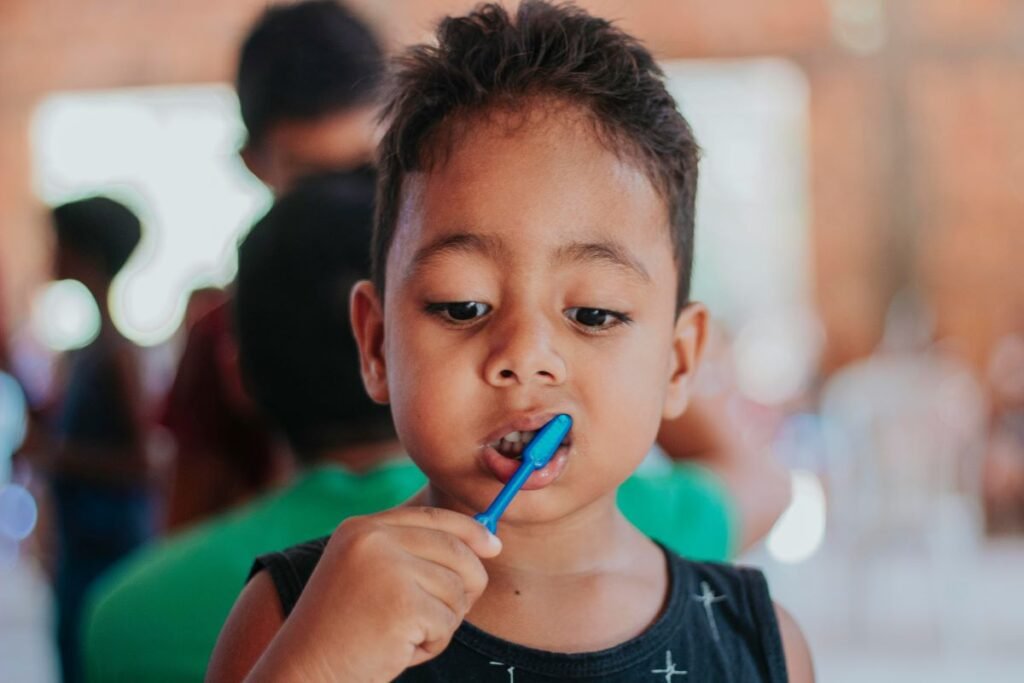
Milk Teeth Matter More Than You Think
The widespread Nigerian belief that milk teeth (baby teeth) do not matter because ‘they will fall out anyway’ is one of the most damaging misconceptions in paediatric dental health. Milk teeth hold space in the jaw for the permanent teeth developing underneath them — a milk tooth lost too early through decay causes neighbouring teeth to shift, crowding out the permanent tooth that follows. They are essential for chewing the food that nourishes a growing child. They are critical for speech and language development. And they can develop severe, painful infections that cause significant suffering, spread to the jaw, and threaten the underlying developing permanent tooth. Dental disease in Nigerian children is common, painful, and almost entirely preventable.
Early Childhood Tooth Decay — The Baby Bottle Problem
Early childhood caries (ECC) is a major and growing problem in Nigerian households. The most common cause is putting young children to sleep with a bottle of juice, sweetened pap, formula, or any sugary drink. When a child sleeps with liquid pooling around the teeth, sugar stays in contact with enamel for hours, creating ideal conditions for rapid, severe decay. The result is often visible as brown or black stumps by age 2 or 3. Other contributors include dipping a dummy (pacifier) in sugar or honey, allowing children to sip sweet drinks throughout the day, and not beginning tooth brushing when the first tooth appears. All of these are habits Nigerian parents can change.
When Teeth Come In — and What to Do at Each Stage
- From 6 months: first milk teeth appear. Begin cleaning the gum and teeth with a soft cloth or infant toothbrush immediately.
- Under 3 years: use a rice-grain-sized smear of fluoride toothpaste. Brush twice daily — morning and before bed.
- 3 to 6 years: use a pea-sized amount of fluoride toothpaste. Supervise brushing until the child does it well.
- Age 6 to 7: first permanent molars appear behind the milk teeth. These are often mistaken for milk teeth. They are permanent and must be cared for accordingly.
- Age 6 to 12: mixed dentition phase — a combination of milk and permanent teeth. The first dental visit should have happened long before this, not when a toothache finally appears.
- Age 17 to 25: wisdom teeth erupt, often causing pain and swelling especially if impacted. See a dentist for assessment.
Good Habits From Day One
- Begin cleaning the gum before any teeth appear — wipe with a clean damp cloth after feeds
- Never put a child to bed with a bottle of juice, sweetened pap, formula, or any sweet liquid — if they need a bottle at night, use plain water
- Do not share spoons with young children or clean a dummy by putting it in your own mouth — decay-causing bacteria (Streptococcus mutans) are transmitted this way from parent to child
- Reduce frequency of sugary snacks and drinks — sweet treats with meals cause less damage than constant grazing throughout the day
- Supervise and assist brushing until at least age 7 to 8 — young children lack the dexterity to brush effectively on their own
- Take children for their first dental visit by age 1 or when the first tooth appears — not when they have a toothache
What Nigerian Parents Often Miss
The concept of preventive dental visits for children with no pain is almost absent in Nigerian practice. Most children see a dentist for the first time with an advanced toothache requiring extraction. The cost of a preventive dental visit — which may identify early decay and apply a simple affordable filling or a protective fissure sealant — is a fraction of the cost of extracting multiple decayed teeth from a distressed child. The single most important shift in Nigerian paediatric dental care is moving from pain-driven to prevention-driven dental attendance.
How Doc on Wheels Can Help
If your child has a toothache, visible decay, or you are concerned about their dental development, speak to a doctor through the Doc on Wheels app. Our doctors can assess the urgency, advise on pain management, and guide you to appropriate paediatric dental care. We can also provide practical guidance on establishing good dental habits at home — because prevention, started early, costs far less and achieves far more than treatment.