
The Most Preventable Dental Disease
Dental caries — tooth decay — is the most widespread chronic disease in the world. In Nigeria, it is undergoing a troubling change: traditional Nigerian diets were relatively low in refined sugar and protective of dental health. Urbanisation, the explosion of soft drinks, sweets, biscuits, and processed snacks in the Nigerian food supply, and inadequate access to fluoride toothpaste and clean water have created a generation of Nigerians with a significant and growing burden of tooth decay. Dental caries is preventable. It is a diet-driven, bacteria-mediated disease. Understanding how it develops is the first step towards stopping it.
How a Cavity Forms — Step by Step
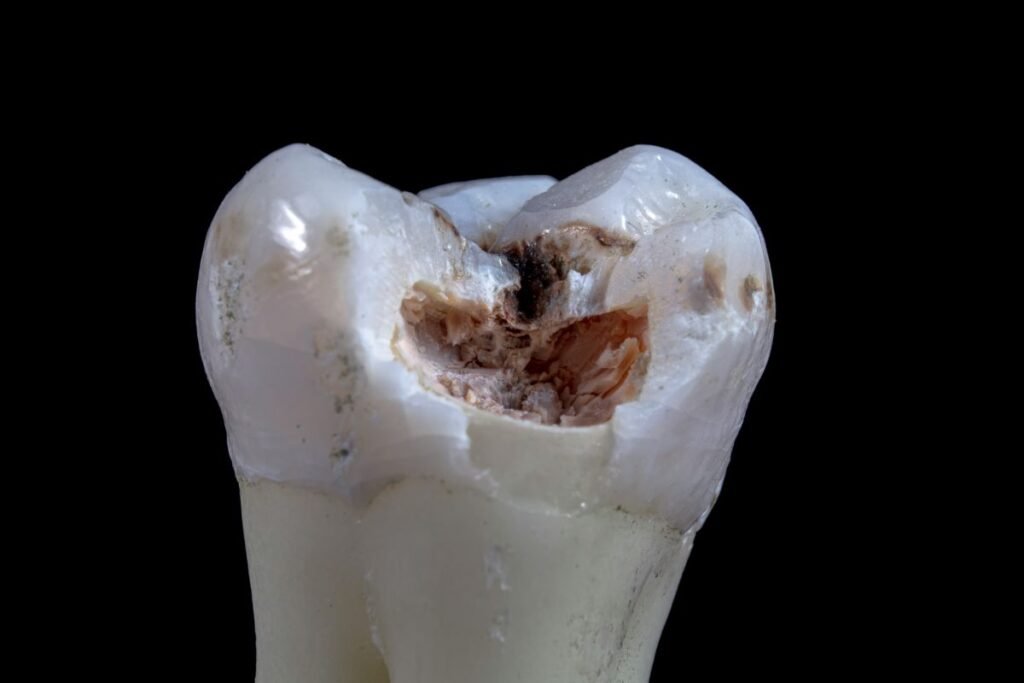
Bacteria in the mouth — particularly Streptococcus mutans — live in a thin film on the teeth called dental plaque. They feed on the sugars and refined starches we eat and produce acid as a byproduct. This acid attacks the enamel surface of the tooth, gradually dissolving its mineral structure. Saliva naturally neutralises this acid and helps the enamel remineralise — fluoride in toothpaste dramatically accelerates this process. But when the frequency of sugar exposure is too high, or when oral hygiene is poor and plaque accumulates, the balance tips towards destruction. The enamel is breached, then the softer dentine beneath is attacked, and finally the bacterial infection reaches the pulp — the living nerve at the centre of the tooth — causing intense pain and requiring either root canal treatment or extraction.
Recognising Early Decay Before It Becomes Serious
- White or chalky spots on the tooth surface: the earliest visible sign of enamel demineralisation — reversible at this stage with fluoride
- Sensitivity to sweet foods or drinks that is brief and resolves quickly: early decay in the dentine
- A visible dark spot, hole, or pit on the tooth: decay has breached the enamel
- Sensitivity to hot or cold that lingers more than a few seconds: decay is approaching or has reached the dentine
- Spontaneous, throbbing pain without any trigger: decay has reached the pulp — this now requires root canal treatment or extraction
- Bad taste or smell from a specific tooth: bacterial breakdown and possibly abscess formation
The Sugar and Frequency Problem — Specific to Nigeria
It is not just the amount of sugar consumed that determines decay risk — it is the frequency. Every time sugar or refined starch enters the mouth, bacteria produce acid for approximately 20 to 40 minutes. A person who drinks one bottle of Coke with a meal does less damage than someone who sips the same bottle over three hours, because the acid attack is repeated continuously. In Nigerian daily life, keeping a malt or sugary kunu to sip throughout the day, sucking on wrapped sweets, chewing sugarcane, and drinking heavily sweetened teas all create the same prolonged acid pattern. Being aware of this changes the practical advice — not ‘never have sugar’ but ‘limit how many times per day your teeth are exposed to it, and clean your teeth properly before bed.’
Prevention That Actually Works
- Brush teeth twice daily — last thing at night and once during the day — using a fluoride toothpaste. Brushing before bed is the most important: it removes the day’s accumulated plaque before it has all night to produce acid.
- Do not rinse your mouth with water immediately after brushing — spit out the excess toothpaste and leave the residual fluoride on the teeth
- Reduce the frequency of sugary food and drink — have them with meals rather than as constant snacks throughout the day
- Drink water between meals rather than sugary drinks
- For children: never put them to bed with a bottle of juice, sweetened pap, or formula — this is a leading cause of early childhood tooth decay in Nigeria
- Visit a dentist every 6 to 12 months — decay found early is treated with a simple affordable filling, not extraction
How Doc on Wheels Can Help
If you have tooth pain, sensitivity, or visible changes in your teeth, speak to a doctor through the Doc on Wheels app. Our doctors can assess your symptoms, advise on urgency, and help you access appropriate dental care.