
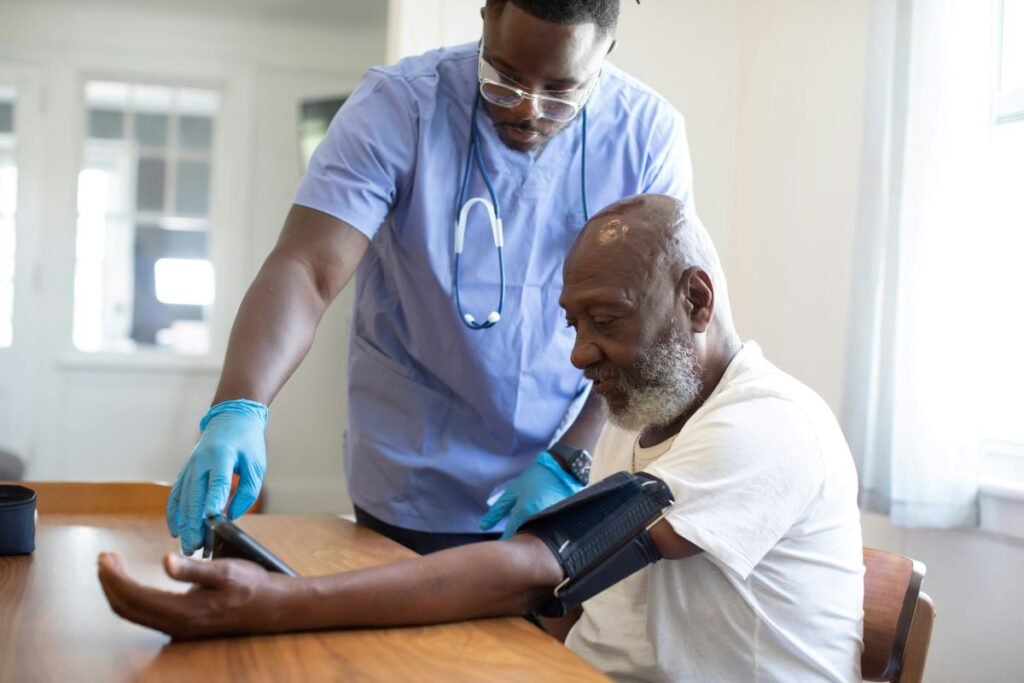
The Condition Killing Nigerian Men Too Young
Heart disease is the leading cause of death in men worldwide, and in Nigeria it is killing men at increasingly younger ages. A 45-year-old man dying from a heart attack or a stroke in his prime earning years is no longer unusual in Nigerian hospitals. The reasons are well understood: hypertension that went undetected or untreated for years, diabetes that was diagnosed late, diets increasingly loaded with salt and processed food, and a culture in which men do not see doctors until something has already gone seriously wrong. Heart attacks and strokes are not random events — they are the predictable end point of years of unmanaged cardiovascular risk, and for most men they are entirely preventable.
Understanding the Difference Between a Heart Attack and a Stroke
A heart attack (myocardial infarction) occurs when a blood clot blocks a coronary artery — the vessels that supply blood and oxygen to the heart muscle itself. When the heart muscle is deprived of oxygen, it begins to die. Every minute of delay between the onset of a heart attack and receiving treatment increases the amount of heart muscle that is permanently lost. A stroke occurs when blood supply to part of the brain is cut off — either by a clot blocking an artery (ischaemic stroke, 85% of cases) or by a blood vessel rupturing and bleeding into the brain (haemorrhagic stroke, 15%). Both are medical emergencies. Both require the fastest possible response.
Recognising a Heart Attack
- Central chest pain, pressure, tightness, squeezing, or heaviness — often described as ‘an elephant sitting on my chest’
- Pain spreading to the left arm, both arms, the jaw, neck, or upper back
- Sweating — sudden, drenching cold sweat
- Nausea or vomiting
- Shortness of breath, with or without chest pain
- A feeling of impending doom or extreme anxiety
- Indigestion-like discomfort that is unusually severe or does not respond to antacids
- If any of these develop: call for help and get to a hospital immediately. Do not drive yourself. Do not go to sleep hoping it passes.
Recognising a Stroke — FAST
- Face: ask the person to smile — is one side of the face drooping?
- Arms: ask the person to raise both arms — does one arm drift downward?
- Speech: ask the person to repeat a simple sentence — is their speech slurred, confused, or impossible?
- Time: if any of these signs are present, get to a hospital immediately. Time is brain.
- Also: sudden severe headache unlike any before (‘the worst headache of my life’), sudden vision loss, sudden inability to walk or balance
The Silent Risk Factors Every Nigerian Man Carries
Hypertension is the single biggest driver of heart disease and stroke in Nigerian men — and studies consistently show that fewer than half of Nigerian men with hypertension know they have it. The rest are walking around with dangerously elevated blood pressure, no symptoms, and a progressively increasing risk of a catastrophic event. High cholesterol is the same story — completely silent, identifiable only by a blood test, and highly controllable when identified. Diabetes — also frequently undiagnosed — damages every blood vessel in the body, multiplying cardiovascular risk. Smoking, which is more prevalent in Nigerian men than women, directly and aggressively damages the arteries. Carrying excess weight around the abdomen — common with age and a more sedentary lifestyle — compounds every other risk factor. The striking thing about all of these is that every one of them is measurable before they cause damage, and every one of them is modifiable.
What Every Man Over 35 Should Be Doing
- Have your blood pressure checked — if it has been more than a year since your last check, do it now
- Have a fasting blood glucose and cholesterol test — these are cheap, widely available, and lifesaving in what they reveal
- If you smoke, stop — there is no safe level, and every cigarette is doing measurable damage
- Reduce your salt intake significantly — less salt during cooking, less stock cubes and Maggi, less salted snacks
- Exercise at least 30 minutes most days — walking counts
- If you have been diagnosed with hypertension or diabetes and placed on medication, take it every day — missing doses allows silent damage to accumulate
How Doc on Wheels Can Help
Through Doc on Wheels, you can arrange a home visit for blood pressure measurement, blood glucose testing, and cholesterol screening. Our doctors can review your results, explain what they mean for your personal risk, and advise clearly on next steps. If you have symptoms that concern you, a doctor is available to speak with you through the app. Do not wait for a crisis to start taking your heart seriously.