
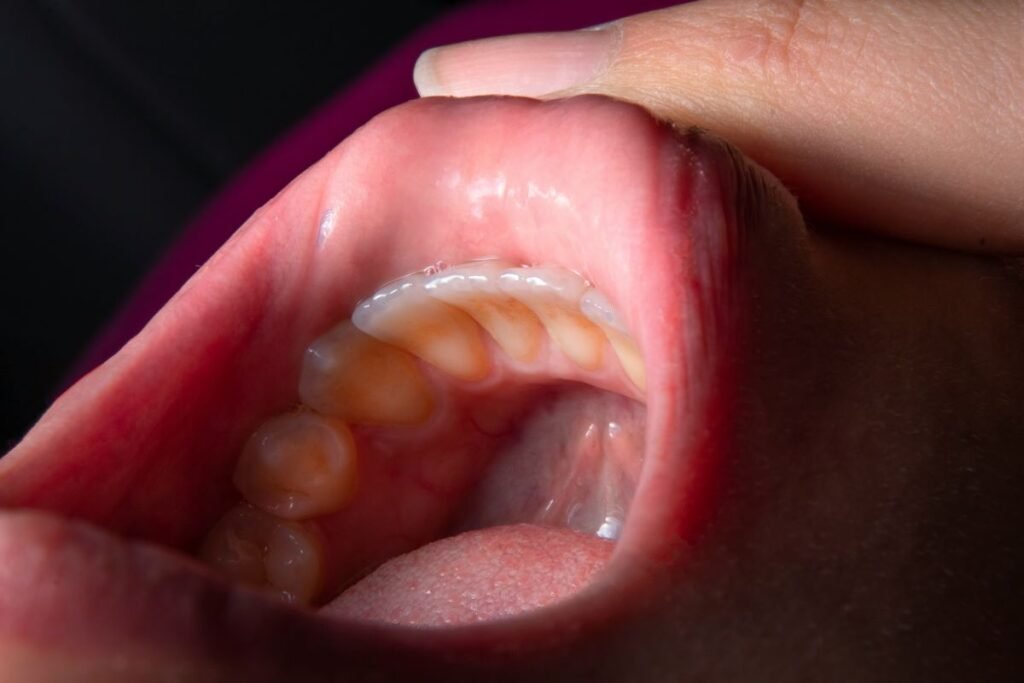
The Slow Disease That Steals Your Teeth
Gum disease is the leading cause of tooth loss in adults worldwide — not decay, not accidents. It is also one of the most underappreciated systemic health risks in medicine: gum disease is consistently linked to increased risk of heart disease, stroke, difficult-to-control diabetes, premature birth, and respiratory infections. In Nigeria, gum disease is widespread and under-treated. Most Nigerians with gum disease do not know they have it, because the early stages are completely painless. Bleeding gums when brushing is dismissed as normal. By the time teeth are loose, significant irreversible damage has already been done.
Gingivitis vs Periodontitis — The Same Disease at Different Stages
Gingivitis is the early, reversible stage. Plaque accumulates along the gum line, the gums become red, swollen, and bleed easily when touched. At this stage, with proper brushing and professional cleaning, the gums return to full health. Periodontitis is what gingivitis becomes when left untreated. The infection spreads below the gum line and begins to destroy the bone and connective tissue holding the teeth. Pockets form between the teeth and gums, fill with bacteria, and deepen progressively. The gums recede. The teeth loosen. This damage is not reversible — bone lost to periodontitis does not grow back.
Signs of Gum Disease
- Bleeding gums when brushing or eating — the most common early sign, dismissed daily by millions of Nigerians as normal. It is not normal. Healthy gums do not bleed.
- Red, swollen, or tender gums that look puffy rather than pale pink and firm
- Persistent bad breath despite brushing — bacteria in deep infected gum pockets produce volatile sulphur compounds that cause constant halitosis
- Gums pulling away from the teeth, making teeth look longer than before
- Loose teeth or teeth that have shifted position
- Pain when chewing
- Pus visible between the gum and tooth
Why Gum Disease Is a Whole-Body Problem
Bacteria from infected gum tissue enter the bloodstream through the inflamed gum wall and circulate throughout the body. Large studies consistently find that severe gum disease is associated with a 20 to 30% increased risk of heart attack and stroke. In people with diabetes, gum disease makes blood sugar harder to control — and poorly controlled diabetes makes gum disease more severe. Treating gum disease can improve diabetic blood sugar control. For pregnant women, severe periodontitis is associated with premature birth and low birth weight. Your mouth is part of your body, and what happens there affects everything else.
What You Can Do
- Brush properly twice daily — at the gum line, not just the tooth surface. Angle the brush at 45 degrees toward the gum and use small circular motions.
- Use a soft-bristled toothbrush — harder bristles do not clean better and damage the gum over time
- Clean between teeth daily — gum disease begins where the toothbrush cannot reach. Use floss, interdental brushes, or a water flosser.
- If you use a chewing stick, use it gently — aggressive scrubbing tears the gum tissue
- Stop smoking — smoking is one of the strongest risk factors for severe periodontitis and dramatically impairs gum healing
- Control your diabetes — poorly controlled blood sugar accelerates gum disease significantly
- See a dentist for professional scaling at least once a year — this removes hardened tartar that brushing cannot touch
How Doc on Wheels Can Help
If you have bleeding gums, persistent bad breath, or any symptoms above, speak to a doctor through the Doc on Wheels app. Our doctors can assess your symptoms and connect you with appropriate dental care. For those with diabetes, we can also help monitor blood sugar — managing gum disease and diabetes together produces better outcomes than treating each in isolation.